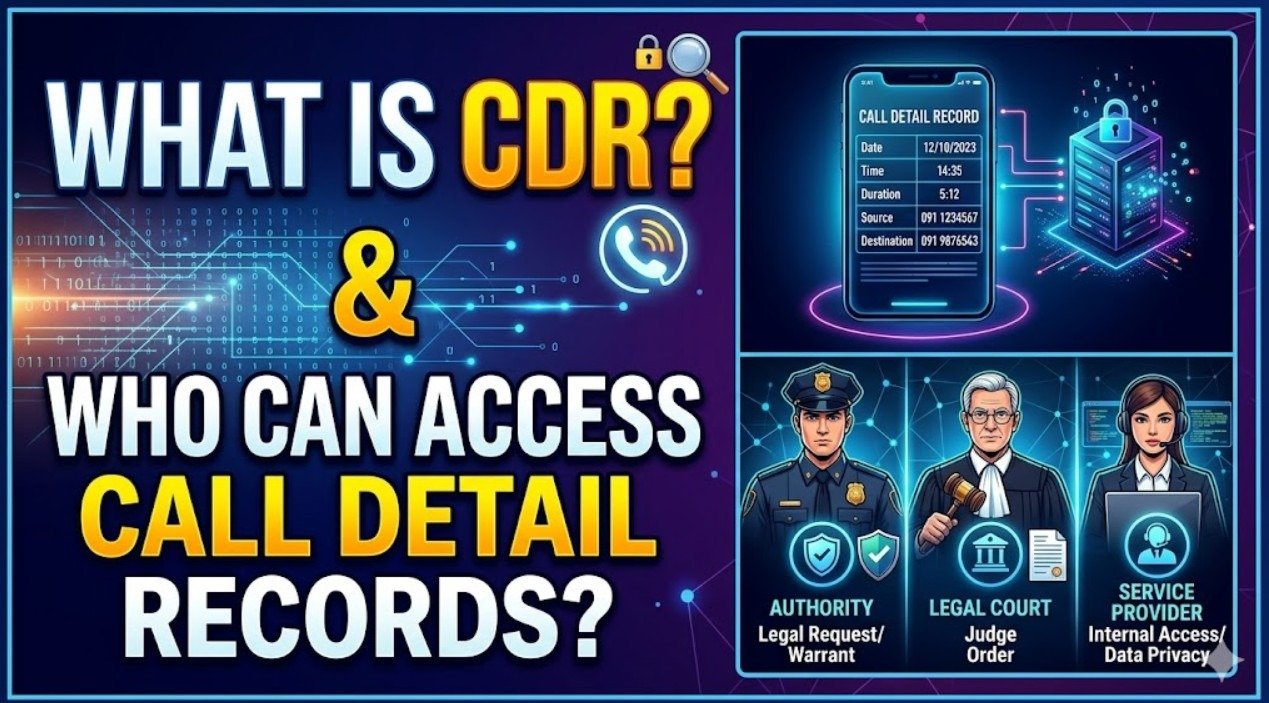
In modern telecommunications, every phone call, SMS, or mobile interaction leaves a digital footprint. One of the most important records created by telecom systems is called a Call Detail Record (CDR).
Many people search online to understand:
- What is CDR?
- What information does a CDR contain?
- Who can access CDR data?
- Is it legal to obtain someone’s call records?
These questions are important because CDR data contains sensitive communication information. Governments, telecom companies, and law enforcement agencies rely on CDRs for network management, billing, and criminal investigations.
In this guide, we will explain what CDR is, how it works, what data it contains, and who can legally access it, using simple language and real-world examples.
What is CDR (Call Detail Record)?
A CDR (Call Detail Record) is a digital log created by a telecom network that records information about phone calls, SMS messages, and other communication activities.
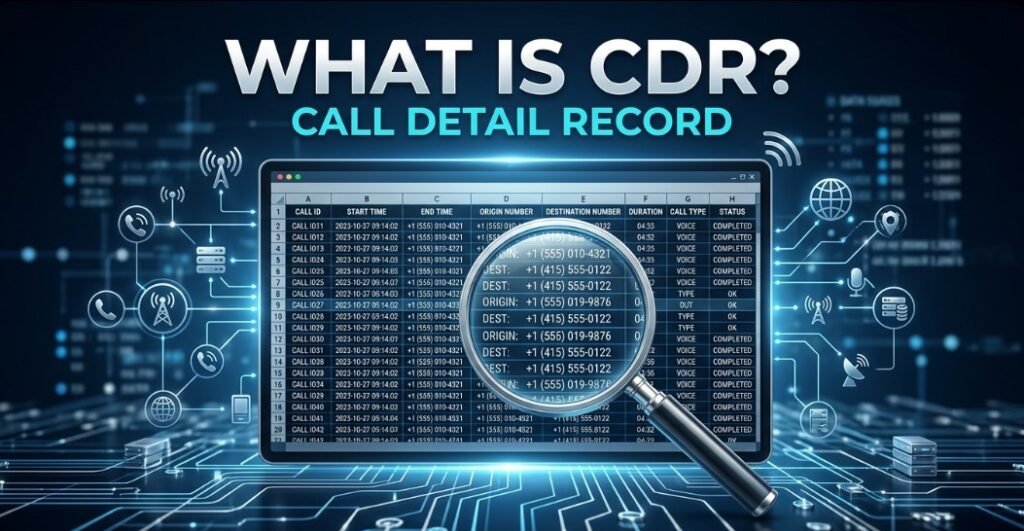
It does not contain the actual conversation, but it records metadata about the communication.
In simple terms
A CDR is like a receipt for a phone call.
It stores details such as:
- who made the call
- who received the call
- when the call happened
- how long the call lasted
Telecommunication companies generate these records automatically whenever a communication event occurs.
How to Check SIM Owner Details online in Pakistan
Why Telecom Companies Create CDRs
Telecom providers generate CDRs for several reasons.
1. Billing and charging
CDRs help calculate charges for:
- call duration
- international calls
- roaming usage
- SMS usage
2. Network monitoring
Telecom operators analyze CDR data to:
- monitor network traffic
- improve service quality
- detect technical problems
3. Security and investigations
Law enforcement agencies may request CDRs during criminal investigations.
What Information is Included in a CDR?
A standard CDR is packed with technical fields that tell a story of connectivity. While different service providers might use slightly different formats, most records include:
1. Subscriber Identity
- Phone Number: Both the originator and the recipient.
- MSISDN: The unique mobile number.
- CNIC/ID Details: In regions such as Pakistan, the record is linked to the SIM holder’s registered identity.
2. Temporal Data
- Date and Time: Exactly when the call started and ended.
- Duration: The length of the call down to the second.
3. Location Tracking (The Most Critical Part)
- Cell Tower ID: The specific tower your phone connected to.
- Location Area Code (LAC): Helps investigators pinpoint the geographic area (city, neighborhood, or street) where you were standing at the time of the call.
4. Device Information
- IMEI Number: The unique “fingerprint” of your physical mobile handset.
- IMSI Number: The unique ID associated with the SIM card itself.
Example of a typical CDR entry
| Field | Example |
|---|---|
| Caller Number | +92XXXXXXXXXX |
| Receiver Number | +92XXXXXXXXXX |
| Date | 12 May 2026 |
| Time | 14:20 |
| Duration | 3 minutes |
| Cell Tower | Location ID |
How CDR Works in Telecom Networks
Whenever a user initiates a call, the telecom switching system records technical details about the connection.
Step-by-step process
- A user initiates a call.
- The telecom switch routes the call.
- Network systems log call metadata.
- The system generates a CDR entry.
- The record is stored in telecom databases.
These records may be stored for months or years, depending on regulatory requirements.
Types of CDR Records
Telecom networks generate several types of CDRs.
1. Voice Call CDR
Logs details about voice calls.
Includes:
- caller
- receiver
- duration
- call status
2. SMS CDR
Records text message events.
Includes:
- sender
- receiver
- time sent
- delivery status
3. Data Session CDR
Tracks internet usage.
Includes:
- data volume
- session duration
- network gateway
Who Can Access CDR?
One of the most important questions people ask is:
Who can access call detail records?
Because CDR data contains private communication metadata, access is strictly controlled.
Generally, only authorized entities can access it.
1. Telecom Service Providers
Telecom companies like Pakistan Telecommunication Authority (PTA) generate and store CDR data.
They may use it for:
- billing customers
- network performance analysis
- fraud detection
- regulatory compliance
Employees usually cannot access CDR data freely. Access is limited to specific departments.
2. Law Enforcement Agencies
Police or investigative agencies may request CDR data during criminal investigations.
However, they typically need:
- legal authorization
- court approval
- official investigation request
CDR analysis can help investigators:
- identify suspects
- track communication patterns
- verify alibis
- analyze criminal networks
3. Courts and Legal Authorities
Courts may order telecom operators to provide CDR data in legal cases such as:
- criminal trials
- fraud investigations
- kidnapping cases
- cybercrime investigations
These records can serve as digital evidence.
4. Government Regulatory Authorities
Telecom regulators may access CDR data for compliance monitoring and security purposes.
Examples include telecom regulators and national security agencies.
Their role may involve:
- monitoring telecom activity
- enforcing telecom laws
- national security investigations
Who cannot Access CDR?
Most people cannot legally access someone else’s call records.
This includes:
- private individuals
- third-party websites
- unauthorized agents
- private investigators without legal authority
Unauthorized access to telecom data may violate privacy and cybercrime laws.
How CDR Data is Used in Investigations
CDR analysis is widely used in modern investigations.
Investigators use specialized software to analyze communication patterns.
Key uses include
- tracking suspect locations
- identifying frequent contacts
- mapping criminal networks
- verifying timelines
Mini Case Study Example
Imagine a robbery investigation.
Police analyze the suspect’s CDR data.
They discover:
- frequent calls between suspects
- calls made near the crime location
- communication shortly before the crime
This information helps investigators connect individuals involved in the case.
CDR Analysis Techniques
Telecom analysts use various techniques to study CDR data.
1. Call Pattern Analysis
Examining frequent communication between numbers.
2. Location Tracking
Using cell tower data to determine approximate locations.
3. Network Mapping
Visualizing relationships between multiple phone numbers.
Privacy and Legal Concerns of CDR
CDR data is sensitive because it reveals communication behavior.
Key privacy concerns include:
- surveillance risks
- misuse of telecom data
- unauthorized data access
Many countries have strict regulations controlling access to telecom records.
Telecom companies must follow:
- data protection laws
- telecom regulations
- cybersecurity policies
Best Practices for Protecting Communication Privacy
Users should take steps to protect their communication privacy.
Practical tips
- avoid sharing personal numbers publicly
- Use secure messaging apps
- Enable phone security features
- Report suspicious SIM registrations
Image Suggestions for the Article
1️⃣ Telecom Network Diagram
Alt text: Call detail record generation in a telecom network
2️⃣ CDR Data Table Example
Alt text: Example structure of a call detail record
3️⃣ CDR Investigation Flow
Alt text: How law enforcement analyzes call detail records
Internal Linking Suggestions
If this article is published on a telecom or data information website, link internally to:
- SIM registration guides
- telecom security articles
- privacy protection guides
- mobile network technology explanations
External Authority Sources
Refer to information from credible telecom and technology organizations such as:
- International Telecommunication Union
- GSM Association
These organizations publish research about telecom infrastructure and communication systems.
Key Takeaways
- CDR stands for Call Detail Record, a log of telecom communication events.
- It records metadata, not call audio.
- Telecom companies generate CDRs for billing, monitoring, and compliance.
- Access to CDR data is restricted to authorized entities such as telecom operators, courts, and law enforcement agencies.
- Unauthorized access to CDR data may violate privacy laws.
Conclusion
A Call Detail Record (CDR) plays a crucial role in the telecommunications ecosystem. It acts as a digital log that documents communication events such as calls, SMS, and data sessions.
While these records are essential for billing, network optimization, and criminal investigations, they also contain sensitive metadata. For this reason, access to CDR data is strictly regulated and limited to authorized entities such as telecom companies, legal authorities, and investigative agencies.
Understanding how CDR works helps users become more aware of telecom privacy and how communication data is managed in modern networks.
Frequently Asked Questions (FAQs)
1. What is CDR in telecom?
CDR stands for Call Detail Record, which is a log of metadata related to phone calls, SMS messages, or internet sessions.
2. Does CDR contain call recordings?
No. CDR records call metadata only, such as numbers, time, and duration. It does not contain the actual conversation.
3. Who can legally access CDR?
Authorized entities such as telecom providers, law enforcement agencies, and courts may access CDR data under legal procedures.
4. Can individuals check someone else’s CDR?
No. Accessing another person’s call detail records without authorization may violate privacy and telecom laws.
5. How long do telecom companies store CDR data?
The storage period varies depending on telecom regulations and company policies. In many regions, records may be stored for months or years.